
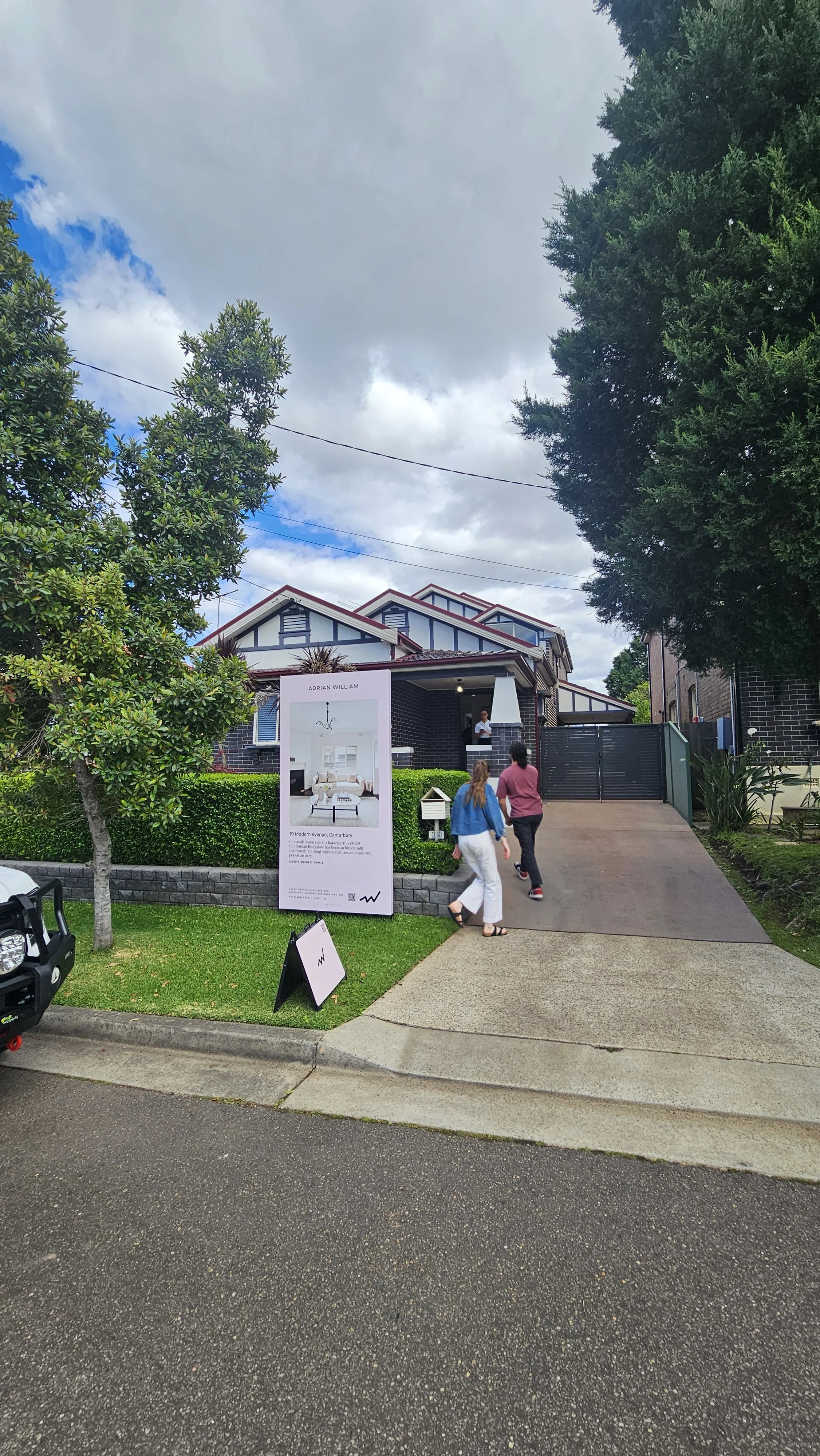
A buyer who didn’t live locally found a beautifully renovated Californian bungalow in Canterbury. With a disciplined, patient bidding strategy, we secured it at auction for under $2.7 million, nearly $200,000 below the closest comparable sale.
The Client
My client came to me with a clear idea of how she wanted to work. She was happy to do the searching herself. What she wanted was someone in her corner for the parts that carry the most risk: due diligence, pricing and negotiating with agents.
She also didn’t live in the area she was buying in. She knew that buying somewhere you don’t know well puts you at a disadvantage against local buyers and local agents, and she wanted to lean on local expertise to close that gap.
Setting Up to Move Fast
In our first conversation, I set out the process and gave her one instruction:
When you walk out of an inspection thinking you love it, call me as soon as you get in the car.
Don’t wait until the weekend. Don’t sleep on it. Get it on my radar straight away, so we have time to do the work properly and move quickly if we need to.
A couple of weeks later, the call came.
“I’ve seen something I love.”
The Property
It was a Californian bungalow that had been beautifully renovated. It was move-in ready, it presented very, very well, and it was a large family home.
Getting the Cogs Turning
We talked through that specific property and agreed on next steps straight away:
She would go back to the mid-week open and take her sister for a second opinion
I would call the agent to find out about the campaign and timing, without revealing who I was working for at this stage
We would get an independent building and pest report done
We would get the contract review underway
The agent confirmed that the property was highly likely to go to auction, or at the very least run another full week of the campaign.
My client was keen to put in a pre-auction offer. I understood why, but I explained that the best time to make an offer is when the vendor is in the headspace to accept it. Making one too early often just sets a floor for other buyers to bid against.
So I went through at the following Saturday inspection myself. I wanted to see the property in person and gauge how many people were genuinely interested.
The Pricing Challenge
After that second Saturday, I took my client through my analysis of comparable sales. This was harder than usual.
Not because the property was truly one of a kind, but because we’d been in a very low-stock market. Very little like it had sold in the last 12 months. The closest comparable was a February 2026 sale at $2.88 million, and we knew the market had softened since then.
I also talked her through how auction conditions can shape the final price, separate from what the comparables say a property is worth.
Then the agent confirmed the property was going to auction and wouldn’t accept offers beforehand.
So we prepared for auction.
The Auction Strategy
Going in, we expected four owner-occupier bidders, including us. There was also a real chance the reserve would be set well above the $2.4 million price guide.
That possibility shaped my whole approach. If a property might pass in, how you bid matters as much as how much you bid:
I wanted the vendor to hear reluctance in my bidding, so they’d start to believe this was the best they were going to get
If the property passed in, the agent’s job would be to get us to increase our price. Negotiating up from a lower base would give my client a better overall result
A knockout bid, a big early jump meant to scare off competitors, makes sense in some auctions. When you may not hit the reserve, it simply hands the vendor a higher starting point. It wasn’t a strategy I wanted to use here.

Auction Day
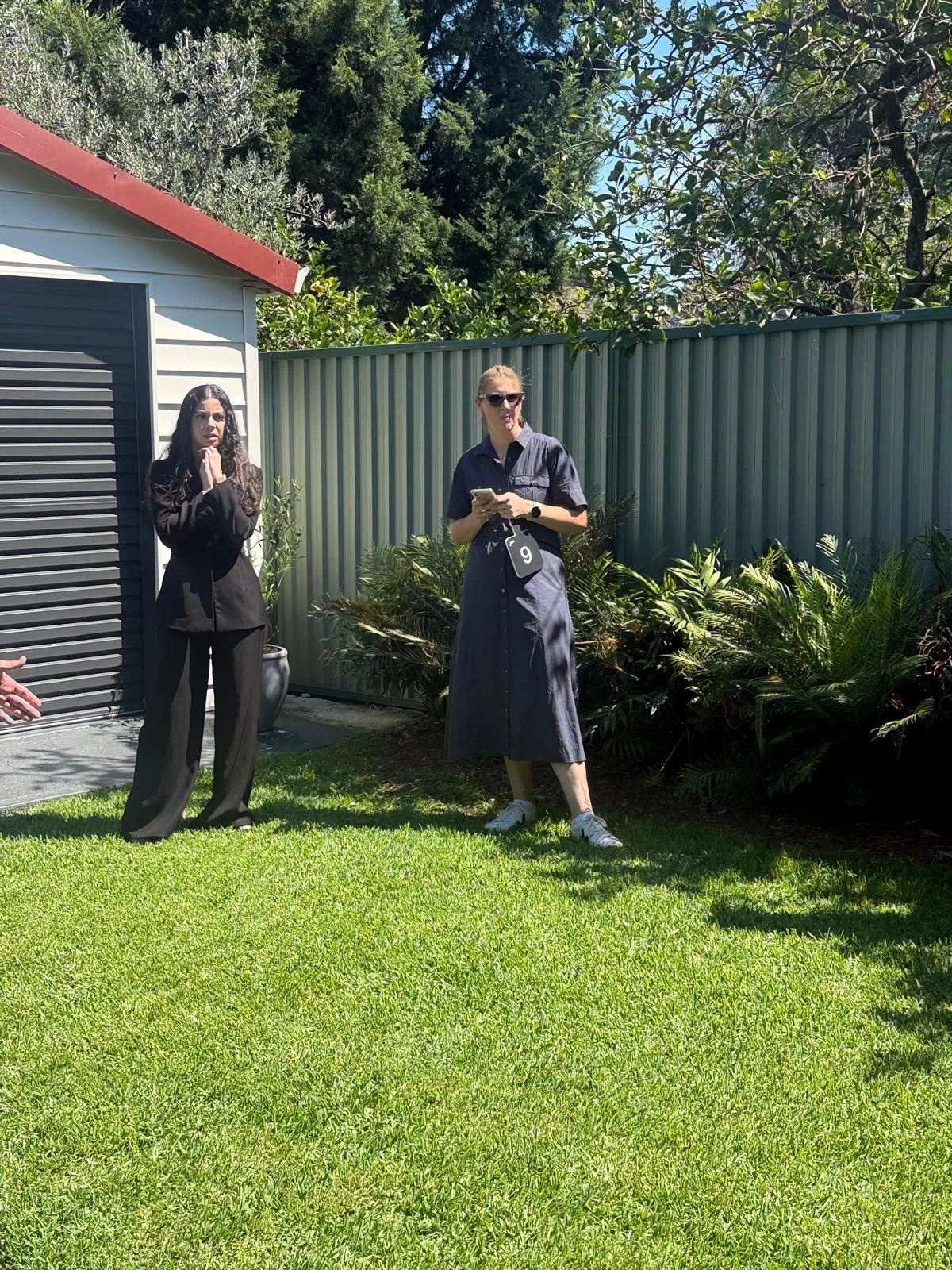
When I arrived, only three parties had registered. One had pulled out the day before. I knew one of the other bidders was represented by a buyer’s agent, and I worked out who the remaining party was during registration.
I didn’t want to open the bidding, so I sat back.
The other buyer’s agent tried to open at $2.3 million, well under the $2.4 million guide. The auctioneer knocked it back. To me, a buyer’s agent opening that far under the guide signalled that they probably weren’t going to be very competitive.
The other couple, Party B, weren’t interested in opening either. What I wanted to avoid was an unrealistic vendor bid setting the tone. So I opened at the price guide of $2.4 million, knowing the property was never going to sell at that figure, even in current conditions.
Party B came back with a $50,000 bid. At that point the other buyer’s agent indicated she had no plans to bid.
It was now a two-person auction.
Bidding on Value, Not Emotion
Throughout, I kept two things front of mind: we might not reach the reserve, and I wanted to convince Party B that I didn’t think the property was worth any more than they did.
Every time they bid, I slowed my increments. This wasn’t a show of weakness. It was a show of value. I was spending my client’s money as if it were my own.
Twice, the auctioneer knocked back my bid and asked me to raise my increment. With only two of us bidding and where the auction sat, I held firm and repeated what I was willing to bid. He ultimately accepted my bids.
The auction moved into what I’d call fair value for this property, reaching $2.65 million off a $2.4 million guide. Party B were clearly running out of steam. They were talking between themselves, writing numbers on paper and doing maths mid-auction. On a couple of occasions they told the agent and auctioneer they were out, then bid again.
Then it was announced that the property was on the market. We had met the reserve.
From there, the bidding bounced slowly back and forth in very small increments until the hammer fell in my client’s favour.
The Outcome
• Purchased at auction for under $2.7 million
• Nearly $200,000 less than the closest comparable sale from earlier in the year
• A beautifully renovated, move-in ready Californian bungalow and large family home
Given current market conditions, this was a really great result for a property of this quality.
Doesn’t the Person With the Most Money Always Win?
People often ask me how I can add value at an auction. Isn’t it always the person with the most money who wins?
Fundamentally, yes. If someone is willing to pay significantly more than you, I can’t out-strategise that.
But in this case, my client was willing to pay more than the other party. So the quicker I could slow their bidding and get them to stop, the less my client paid. It also reduced the risk of her having to negotiate against herself if the property passed in.
I could have made a knockout bid. But to work, it would probably have needed to land close to $2.7 million, and it would have cost my client more than what we ultimately paid.
Having the biggest budget won her the property. Strategy decided how much of it she had to spend.
If you would like representation at auction, book a call here or send me an email.
