
The $50,000 cost hiding on the balcony
More and more buyers tell me they don't want a new build. They've seen the defect headlines and would rather buy into a solid 1960s to 1990s red-brick walk-up with no lift and no fancy amenities. I understand the thinking, but there's no such thing as the perfect strata. These older blocks carry a couple of big-ticket items, and one of the biggest is sitting right outside the sliding door: the balcony.
Why balconies are the one to watch
In Australia, waterproofing has an average lifespan of around 25 years. That doesn't mean every balcony fails on its 25th birthday, but it tells you where things are heading. If you're looking at a 1970s block and the balconies are original and have never been rewaterproofed, you should assume a remediation project is likely while you own there.
These projects often include new balustrades too. Original balustrades usually sit lower than today's minimum height of 1 metre from the finished floor level.
Start with your eyes, then the strata report
I'm not a builder, but original balconies are usually easy to spot. Look for heavy black staining, sagging, chipped paint and obvious patch repairs, along with balustrades that sit noticeably low.
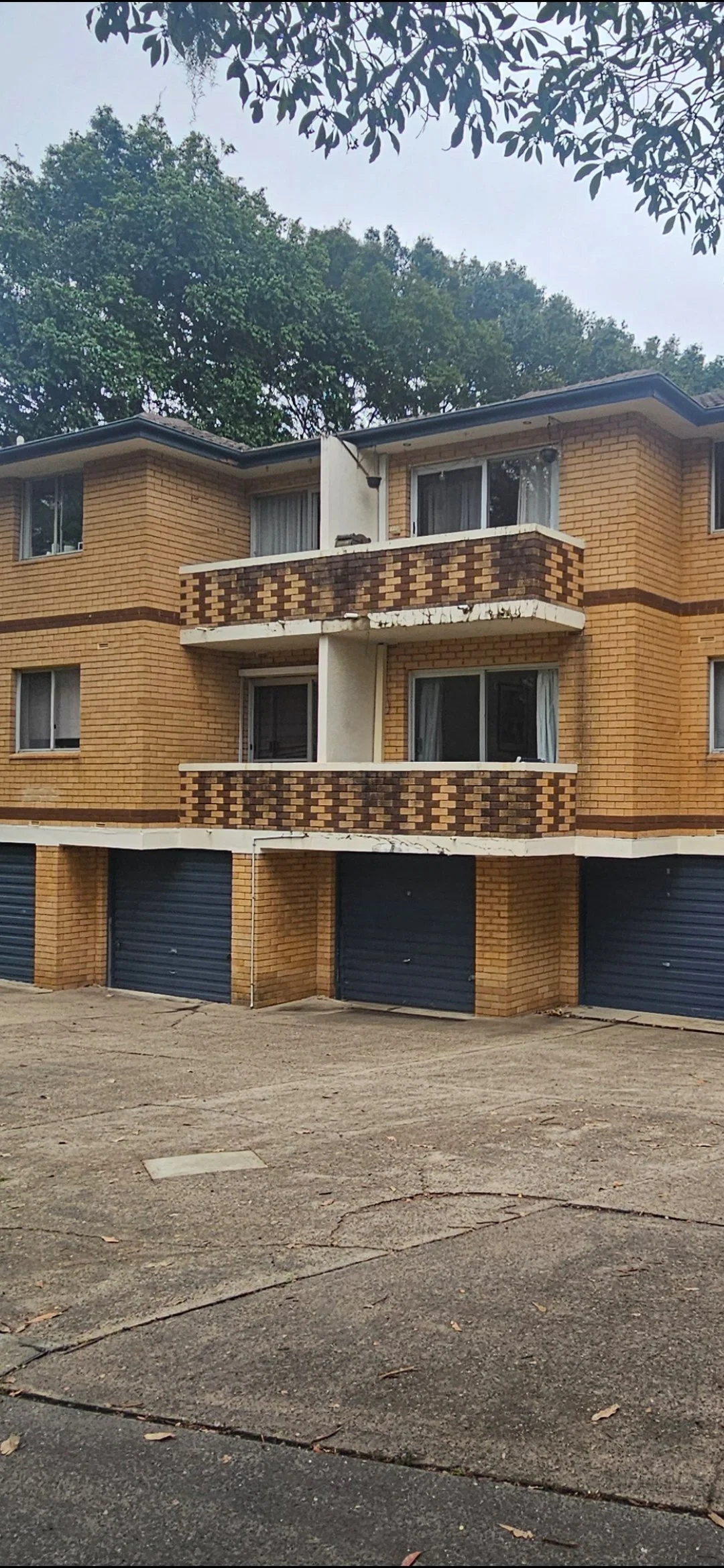
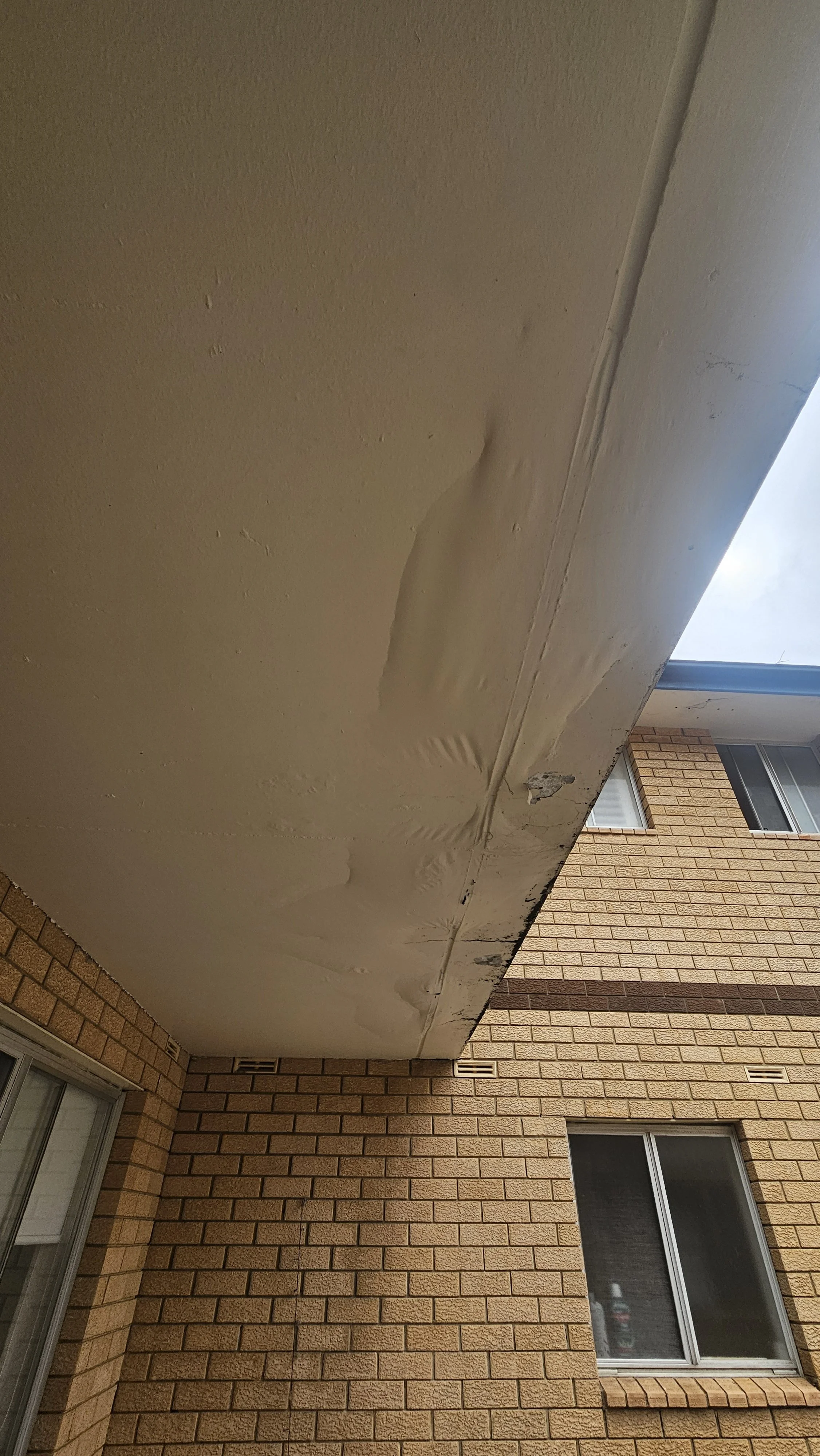
If you still can't tell, go to the strata report. You can ask the agent, but the report is where I'd look first. If the balconies have been redone in the last ten years, it should show what work was done, what it cost, how long it's expected to last and whether any issues have come up since.
If the work hasn't been done, search the report for any mention of balcony remediation or waterproofing. Your job is to work out where the owners corporation is in the journey. Is it on their radar? Are they talking about it? Have they raised the funds?
The stages every strata scheme moves through
It starts with an engineer's report. The engineer assesses the balconies, scopes the project and indicates how urgent it is, whether that's now, within a year or within five years. It should also say whether the balustrades need replacing, which isn't always the case. If the report exists, it should be in the strata report. If it's mentioned but missing, ask for a copy.
Next, the project goes to tender with at least three builders certified to do strata balcony work. This is where extra scope tends to surface. To waterproof a balcony, for example, the sliding doors often have to come out and be replaced. If quotes are mentioned, ask your strata inspector for copies.
What does it cost?
Then comes funding. Every building is different depending on the number and size of the balconies and any extra work. I’ve seen projects funded at:
$1,000,000 for 10 units being circa $100,000 per unit
$960,000 for 24 units being circa $40,000 per unit
The individual unit cost is based on unit entitlement so never an exact split of total cost / number of units.
The owners corporation will compare that with the capital works fund. They can use a significant portion of the fund but shouldn't drain it to zero, so there's usually a gap. It gets filled one of three ways:
A strata loan. Work can start as soon as possible, but everyone's quarterly levies go up, at a relatively significant interest rate, until it's repaid. Owners can pay out their share early with a lump sum.
A one-off special levy, voted on at an extraordinary general meeting (EGM). For example, every owner pays $35,000 on 1 December. The strata can then lock in a builder start date after that due date. Keep in mind you're one owner of many, so you don't control the vote.
A special levy paid in instalments over several months. It's easier on cash flow, but work can't be committed until the money is in the bank, which pushes the start date out and risks costs rising.
Once the funds are raised, the builder can be engaged. For a 12-unit block, expect roughly 4 to 5 months of works, and 7 to 8 months for 24 units. Builders tend to work one section at a time, so you may not lose your balcony for the whole period, but you could. If you're an investor, think about how your tenants will feel about losing access to a balcony they're paying for.
What does the work look like in progress
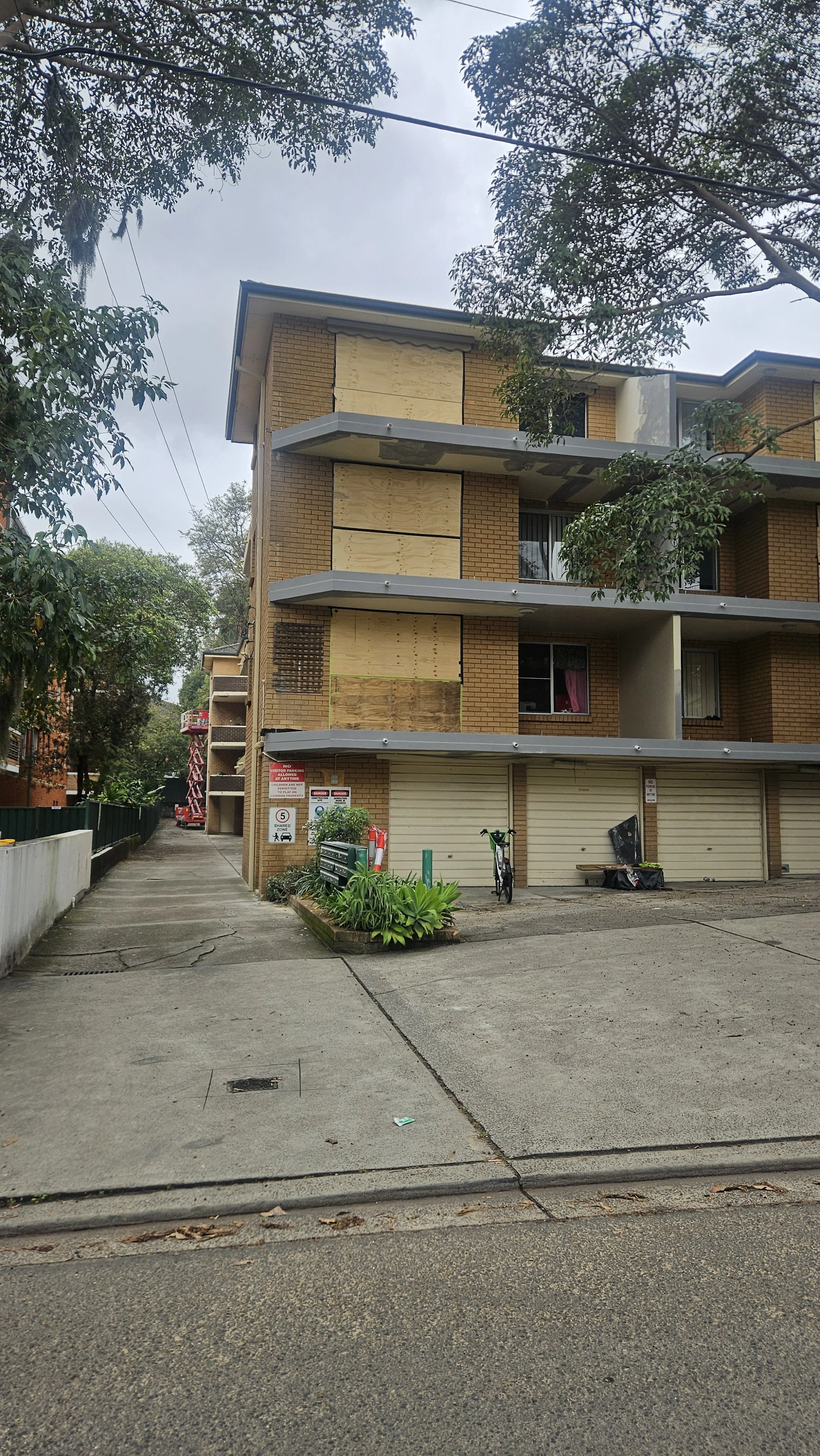
Living without a balcony for a few months might not be your jam
Done or not done: the real trade-off
If a building has recently been remediated, you're effectively paying for it in the purchase price. Compare two otherwise identical units and you'd expect to pay more for the one with the balconies done. In exchange, you avoid the disruption and the uncertainty about how it will be funded.
The catch is that most of these blocks, especially in Sydney's inner west, haven't been done. If you only want a building where the work is complete, you'll need to be flexible on other things and accept that your search may take much longer.
If you buy into a block that hasn't been done, you carry the uncertainty. You won't know whether it will be a loan or a levy, and you won't control the timing. Look at what's in the fund, think about how long you plan to own, and be honest about how you'd feel living through the works. That isn't a reason to walk away. It's simply part and parcel of owning in an older Sydney apartment block.
Want a second set of eyes on the strata?
Strata is an area I specialise in. I've read thousands of strata reports and helped buyers work through exactly these hurdles. If you're weighing up an older apartment and want advice, book a call with me here
